By Cindy Schwall
Indoor air is often more polluted than most homeowners realize, sometimes two to five times more concentrated with pollutants than the air outside. The good news is that improving home air quality doesn't require an expensive overhaul, just the right combination of a few proven strategies. Here is what actually works, based on current EPA and building science guidance.
Key Takeaways
- The EPA outlines three pillars of indoor air quality: source control, ventilation, and filtration, in that order of impact.
- Keeping indoor humidity between 30% and 50% helps prevent both mold growth and the dry air that irritates respiratory systems.
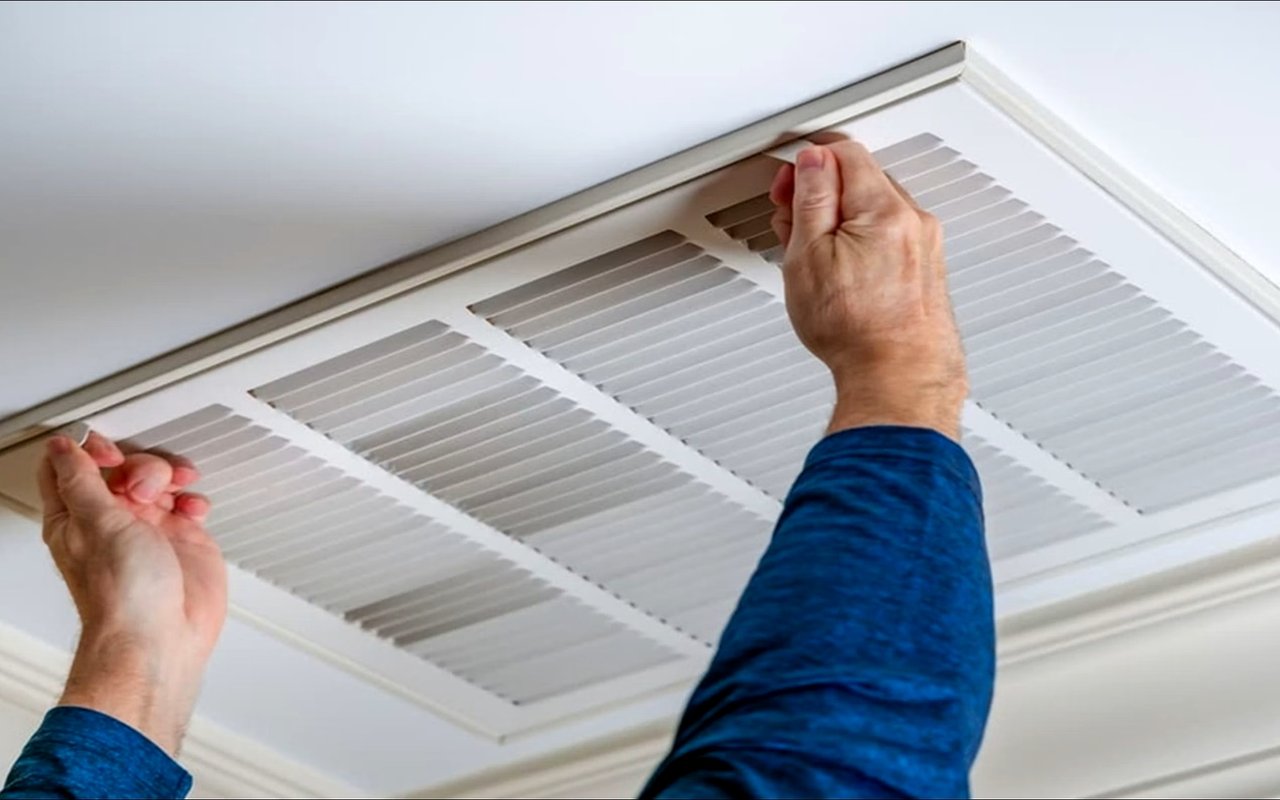
- Upgrading to a MERV-13 HVAC filter is one of the most effective single changes for capturing smaller airborne particles like smoke and bacteria.
- Westchester County's average indoor radon level sits around 2.4 pCi/L, close enough to the EPA's 4 pCi/L action threshold that testing is worth doing regardless of a home's age.
Start With Source Control
Before adding any equipment, the most effective step is removing what's polluting the air in the first place. Source control addresses the problem directly rather than filtering around it.
What to Eliminate or Reduce First
- Air fresheners, scented candles, and aerosol sprays release volatile organic compounds that accumulate indoors over time
- Switching to low-VOC or no-VOC paints and cleaning products reduces a major and often overlooked pollutant source
- Fixing moisture problems, from a slow leak to poor bathroom ventilation, prevents the mold growth that follows excess humidity
- Ensuring combustion appliances like gas stoves and furnaces are properly vented reduces carbon monoxide risk significantly
Addressing these sources directly often solves more of the problem than any filter or purifier can on its own.
Ventilation Matters as Much as Filtration
Even a spotless home needs a steady exchange of indoor and outdoor air. Without it, pollutants and humidity simply build up over time with nowhere to go.
How to Improve Airflow Effectively
- Opening windows for 15 to 20 minutes daily, when weather allows, gives stale indoor air somewhere to escape
- Bathroom exhaust fans should run for at least 20 minutes after showering, since lingering humidity promotes mold growth on surfaces
- Indoor humidity should stay between 30% and 50%, since levels above 60% support mold and dust mites while levels below 30% dry out respiratory tissue
- ASHRAE ventilation standards recommend roughly 90 CFM of continuous outdoor air for a typical 2,000-square-foot, three-bedroom home
Ventilation and filtration work together, but ventilation alone addresses problems that filtration cannot, particularly excess humidity and stale air buildup.
Upgrade Your HVAC Filtration
Once source control and ventilation are addressed, upgrading filtration provides a meaningful additional layer of protection. Your HVAC system is often the single biggest lever homeowners have over daily air quality.
What Filtration Upgrades Actually Help
- MERV-13 filters are currently recommended by the EPA and HVAC professionals for capturing smaller particles like bacteria, smoke, and smog
- A portable HEPA air purifier running continuously in occupied rooms adds meaningful protection beyond whole-house filtration alone
- Professional HVAC maintenance, including duct inspection, prevents leaky ductwork from pulling dusty air in from attics or crawl spaces
- Filters and purifiers work best as a supplement to source control and ventilation, not as a replacement for either
A clogged filter or leaky duct system can undermine even the best equipment, so annual professional servicing matters as much as the equipment itself.
Test for Radon, Especially in Older Homes
Radon is a colorless, odorless gas that seeps in from soil and rock, and it remains one of the most under-tested indoor air risks. Westchester County sits in a range where testing genuinely matters.
What Local Homeowners Should Know
- Westchester County's average indoor radon level is approximately 2.4 pCi/L, based on test result data
- The EPA recommends taking action at 4 pCi/L or higher, and considering mitigation between 2 and 4 pCi/L
- Short-term radon test kits are inexpensive, typically $15 to $30, and widely available at hardware stores
- The EPA recommends retesting every two years, or after any major renovation like finishing a basement or adding an addition
Given how close the county average sits to the EPA's action threshold, testing is a low-cost step worth taking regardless of a home's age or renovation history.
Frequently Asked Questions
What is the single most effective step for improving home air quality?
Source control, meaning removing or reducing pollutants at the source, generally has more impact than filtration or ventilation alone.
How often should I test my home for radon?
The EPA recommends testing every two years, and again after any major renovation that affects the basement or foundation.
Is a MERV-13 filter necessary for every home?
It is widely recommended by the EPA and HVAC professionals for capturing smaller particles, though the right filter also depends on your specific HVAC system's capacity.
Work With Someone Who Knows Scarsdale's Homes Well
Since 2002, my business has focused on personalized attention to client goals, total transparency, and clear, comprehensive communication that delivers real results. My enthusiasm, professional expertise, market knowledge, and attention to detail help me consistently exceed client expectations with the highest level of service.
Having lived in Scarsdale for over 25 years and raised my family here, I understand the ins and outs of these homes, staying active through the PTA, Junior League, and the Maroon & White High School Booster Club, among other organizations. If you are searching for a healthy, well-maintained home in Scarsdale, I would love to help.
Connect with Cindy Schwall today.
Having lived in Scarsdale for over 25 years and raised my family here, I understand the ins and outs of these homes, staying active through the PTA, Junior League, and the Maroon & White High School Booster Club, among other organizations. If you are searching for a healthy, well-maintained home in Scarsdale, I would love to help.
Connect with Cindy Schwall today.